How to Start a Small Herb Garden Indoors: A Beginner’s Guide
Starting a small herb garden indoors is a rewarding way to bring fresh flavors into your kitchen and add a touch of greenery to your living space. Whether you have a sunny windowsill or just a little counter space, growing herbs inside is simple and enjoyable. This guide will walk you through everything you need to know to get your indoor herb garden up and thriving.
Why Grow Herbs Indoors?
Growing herbs indoors has many benefits:
– Freshness: Snip fresh herbs whenever you need them, enhancing your cooking.
– Convenience: Have your favorite herbs close at hand year-round.
– Space-saving: Perfect for apartments or homes without outdoor garden space.
– Aesthetic: Adds natural beauty and a pleasant aroma to your home.
Choosing the Right Herbs
Some herbs are easier to grow indoors than others. Here are beginner-friendly options:
– Basil: Loves sunlight and warmth, perfect for windowsills.
– Parsley: Tolerates moderate light and grows well in containers.
– Mint: Grows quickly but keep it contained as it spreads.
– Chives: Requires less sun and provides a mild onion flavor.
– Thyme: Needs bright light and well-drained soil.
– Cilantro: Prefers cooler indoor temperatures and moderate light.
Start with two or three herbs that you enjoy using most.
Selecting Containers and Soil
Containers
– Size: Choose pots at least 4-6 inches deep to allow roots to grow.
– Drainage: Pots must have drainage holes to prevent waterlogging.
– Material: Terra cotta pots are breathable and popular, but plastic or ceramic also work.
Soil
– Use a light, well-draining potting mix formulated for indoor plants.
– Avoid using garden soil which can be too dense and may contain pests.
Finding the Perfect Spot
Herbs need plenty of light to thrive:
– Sunlight: Most herbs require 6-8 hours of direct sunlight daily.
– Windows: South- or west-facing windows usually provide adequate light.
– Grow Lights: If natural light is limited, consider using LED grow lights for 12-16 hours a day.
Ensure herbs are placed where they won’t be disturbed frequently.
Planting Your Herb Garden
Starting from Seeds
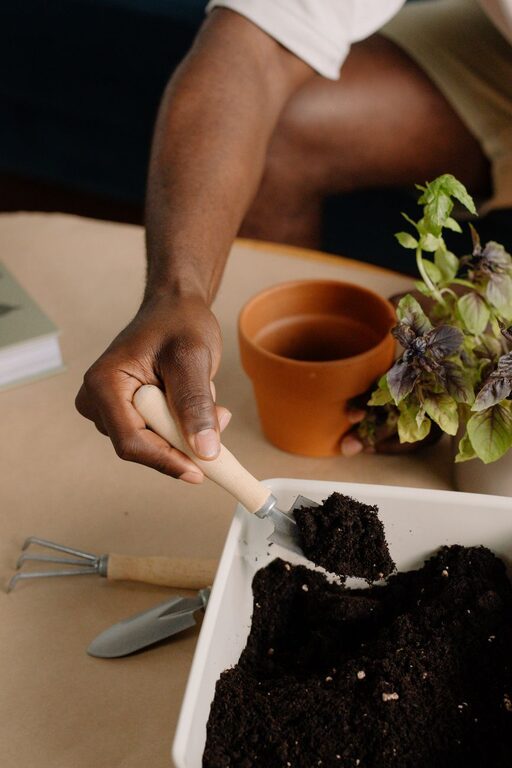
- Fill containers with potting mix, leaving about an inch from the top.
- Plant seeds according to the packet instructions—usually about ¼ inch deep.
- Water gently to moisten the soil.
- Cover containers with plastic wrap or a humidity dome until seedlings emerge.
- Remove cover once plants grow above the soil.
Starting from Seedlings or Cuttings
– Transplant seedlings into pots filled with fresh potting mix.
– If using cuttings, place stems in water until roots develop, then plant in soil.
Caring for Your Indoor Herb Garden
Watering
– Check soil moisture daily by sticking your finger about an inch deep.
– Water when soil feels dry but avoid overwatering.
– Use room-temperature water to prevent shock.
Feeding
– Fertilize every 4-6 weeks with a balanced, water-soluble fertilizer diluted to half strength.
– Avoid over-fertilizing which can reduce flavor intensity.
Pruning and Harvesting
– Regularly pinch off leaves to encourage bushier growth.
– Avoid removing more than one-third of the plant at a time.
– Harvest in the morning for the best flavor.
Managing Pests and Problems
– Indoor herbs are less prone to pests but watch for aphids or spider mites.
– Use natural remedies like insecticidal soap if needed.
– Ensure good air circulation to prevent mold and mildew.
Tips for Success
– Rotate pots periodically to ensure even sunlight exposure.
– Clean leaves occasionally to remove dust.
– Group herbs with similar watering and light needs together.
– Be patient; some herbs grow faster than others.
Conclusion
Growing a small herb garden indoors is a fun and practical hobby that brings fresh, healthy ingredients right to your fingertips. With the right selection of herbs, containers, light, and care, you can enjoy gardening all year round, regardless of your outdoor space. Happy planting!